Careful, not blasted
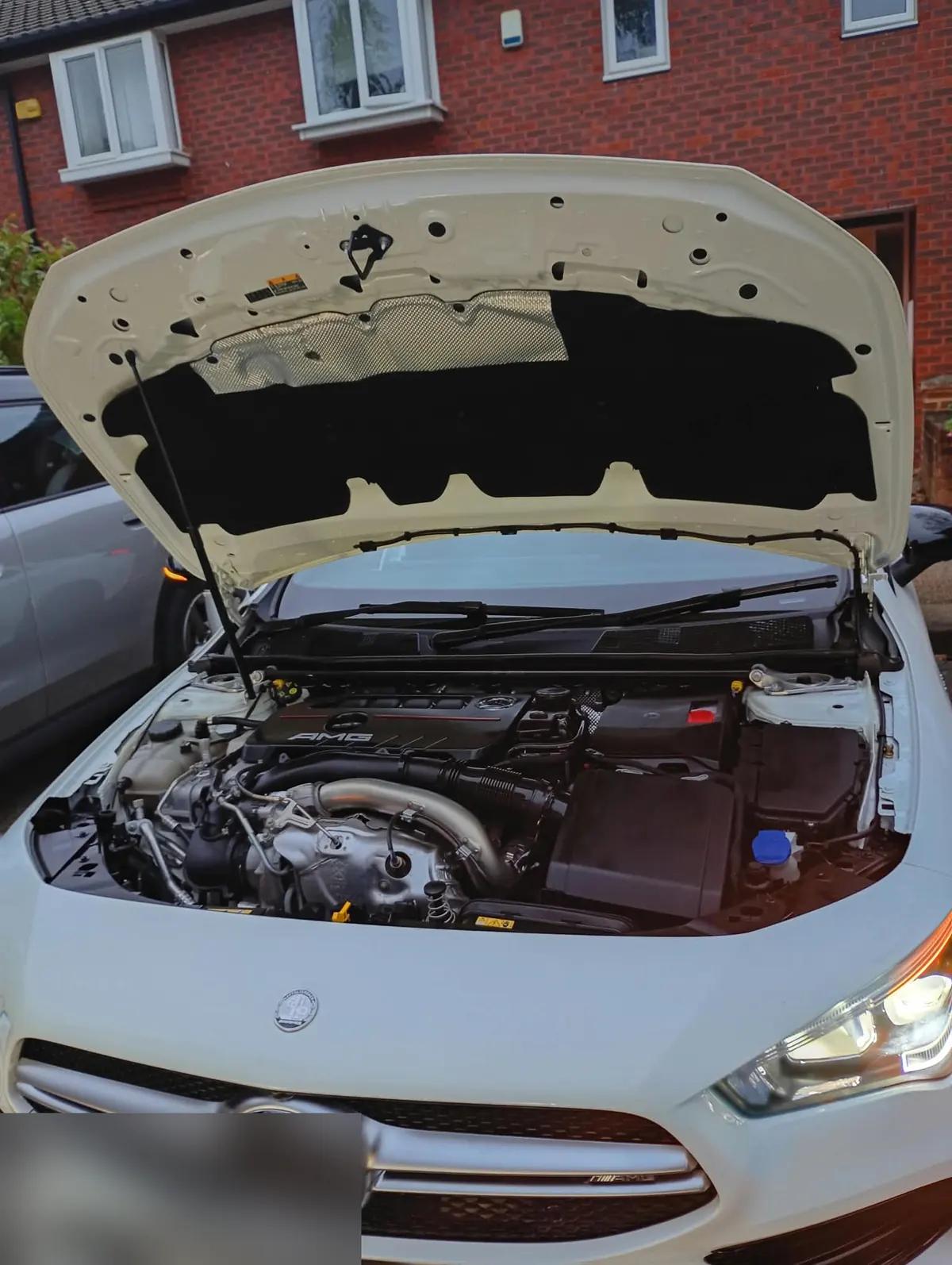
Sensitive parts are covered, the engine is cleaned cool, and grime is worked off with brushes and degreaser rather than a high pressure jet aimed at electrics. Plastics are then dressed so they look clean, not wet.
Before a sale
Buyers lift the bonnet. A clean engine bay suggests a car that has been looked after, and it makes the car easier to inspect.
Spot problems early
On a clean engine, a new oil or coolant leak stands out straight away, so it can be checked before it becomes expensive.
How the clean works, step by step
We start with the engine cool, never hot. Sensitive parts such as the fuse box, exposed electrical connectors and the air intake are covered. Loose leaves, dust and debris are cleared first, then a degreaser goes on the oily areas and is worked in with soft brushes of different sizes, reaching around hoses, brackets and the inner wings.
The bay is rinsed with a gentle, controlled flow rather than a jet, excess water is dried off, and the covers come away. Plastics, hoses and rubber seals are then dressed with a water-based dressing so they look clean and satin, not greasy.
Leaves, seeds and blocked drains
On cars parked under West London's street trees, leaves and seeds collect in the scuttle panel at the base of the windscreen and around the edges of the bay. Left there, they hold moisture, rot down and can block the drains that let rainwater out. We clear out what we can reach during the clean, which helps keep water where it's meant to go.
What an engine bay clean won't do
Cleaning makes a car easier to inspect, but it doesn't fix anything mechanical. If we spot fresh oil, coolant or a perished hose while we work, we'll point it out so you can have it checked by a mechanic.
Background: Engine compartment on Wikipedia.